Български






419,28 € VAT included
NEW
142,65 € VAT included
NEW
65,16 € - 90,60 €
Sale!
83,76 € - 120,24 €
Sale!
Original price was: 459,14 €.300,64 €Current price is: 300,64 €. VAT included
Sale!
![Weight in [g]: 285](https://solarhouse.bg/wp-content/uploads/2024/06/Контролер-Votronic-SR-Duo-Dig-1-300x300.jpg)
![Alternative view of Weight in [g]: 285](https://solarhouse.bg/wp-content/uploads/2024/06/Контролер-Votronic-SR-Duo-Dig-2-300x300.jpg)
MPPT
85,54 € - 153,65 €
Sale!
Original price was: 64,93 €.58,44 €Current price is: 58,44 €. VAT included
Sale!
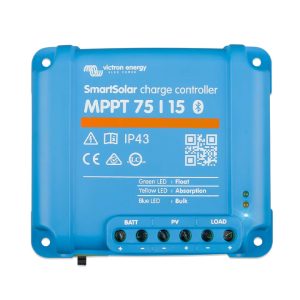
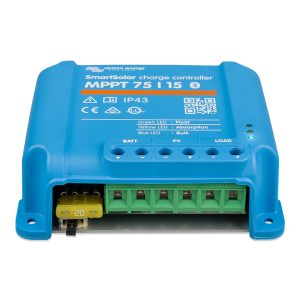
Original price was: 86,41 €.81,60 €Current price is: 81,60 €. VAT included
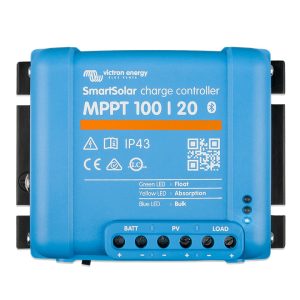
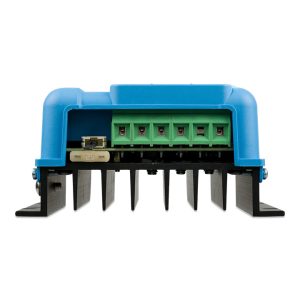
115,04 € VAT included
NEW
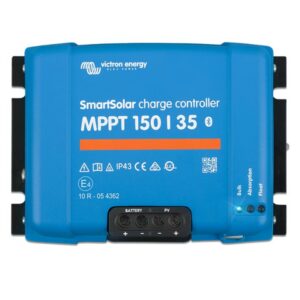
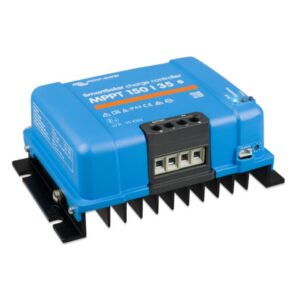
236,00 € VAT included
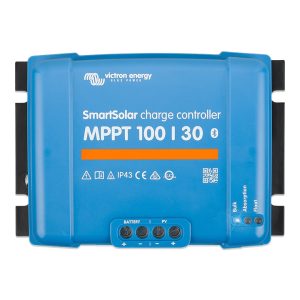
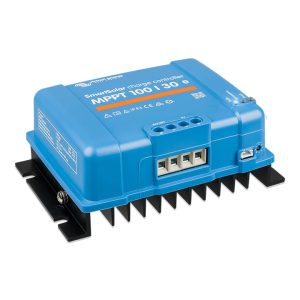
164,64 € VAT included
236,73 € VAT included
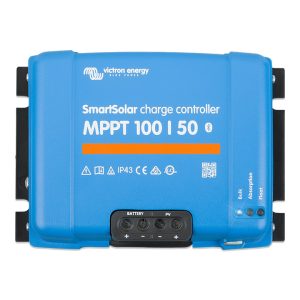
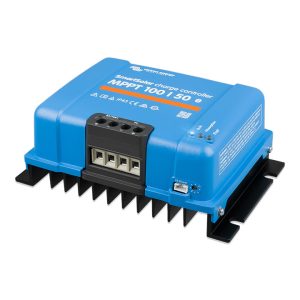
MPPT Controllers
In order to charge a battery, solar panels must apply a voltage that is higher than the battery voltage. If the Vpp of the solar panel is less than or equal to the battery voltage, then the charging current is zero. So, to be on the safe side, typical solar panels are made with a Vpp of around 18V at a cell temperature of 25°C. They do this because Vpp will drop to around 15V on very hot days. However, on very cold days, it can reach 20+V!
When Vpp is much higher than the battery voltage, standard controllers (PWM) drop Vpp to the battery voltage and transfer the current directly to the battery, with the difference between Vpp and the battery voltage being lost.
MPPT changes the ratio between voltage and current to charge the battery to deliver maximum power. If there is excess voltage available from the solar panels, the MPPT converts it into additional current to charge the battery. Since the Vpp of the solar panels varies depending on temperature and other conditions, the MPPT monitors the variations and adjusts the ratio accordingly. This is why it is called Maximum Power Point Tracker.
Simply put, if you want to use panels with a power of more than 190W in a 12V system, you must use an MPPT controller, otherwise with the PWM controller you will absorb less than 50% of the energy of the panel and risk damaging the controller.
When choosing such a controller, take into account the power of the panel, not just the current of the panel. Each controller has data in its description about the maximum power of the panel that it can absorb at 12 or 24V.