Български






Controllers
638,60 € VAT included
Sale!
Original price was: 64,93 €.58,44 €Current price is: 58,44 €. VAT included
Sale!
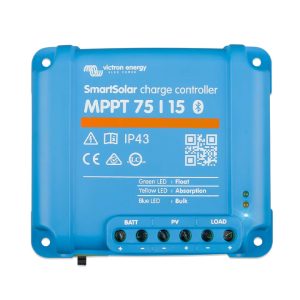
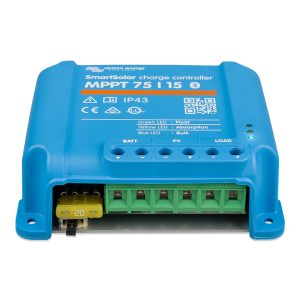
Original price was: 86,41 €.81,60 €Current price is: 81,60 €. VAT included
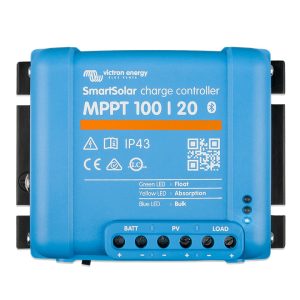
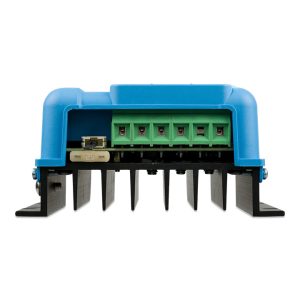
115,04 € VAT included
NEW
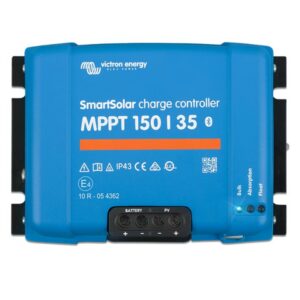
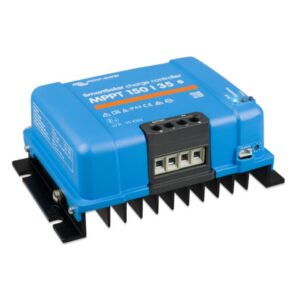
236,00 € VAT included
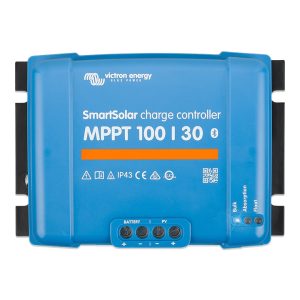
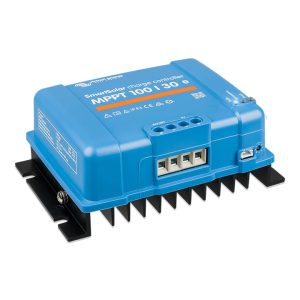
164,64 € VAT included
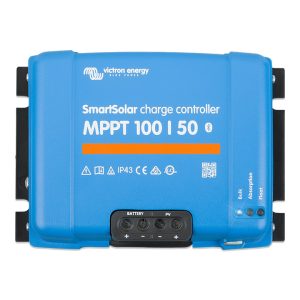
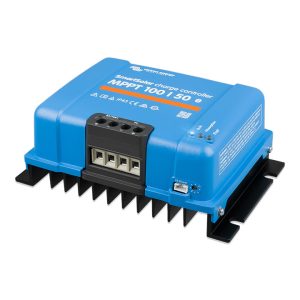
236,73 € VAT included
Sale!
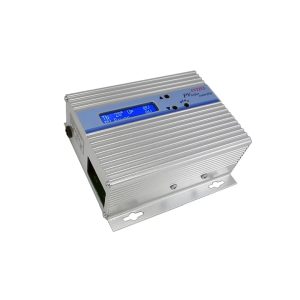
Original price was: 269,96 €.229,47 €Current price is: 229,47 €. VAT included
Solar Controllers
Autonomous photovoltaic systems require a very careful preliminary study of the situation and the customer's electricity needs. The choice of a controller for such a system depends mostly on the number of panels that will be in a photovoltaic system. The controller can provide automatic control of various system functions and must be well selected to fully meet the specific requirements of the customer. It monitors the charge and discharge process for you, as well as the state of the batteries, showing them on a display or through LEDs (depending on the model of the controllers). The main two types of solar controllers are PWM and MPPT.
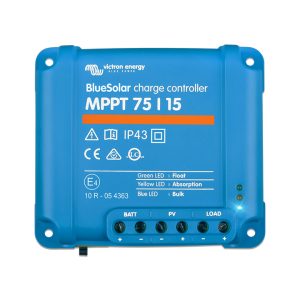
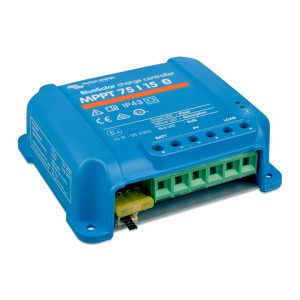
MPPT Controllers
In order to charge the battery, the solar panels must apply a voltage that is higher than the battery voltage. If the Vpp of the solar panel is below or equal to the battery voltage, then the charging current is zero. So, to be on the safe side, typical solar panels are made with Vpp at around 18V at a cell temperature of 25°C. They do this because Vpp will drop to about 15V on very hot days. However, on very cold days, it can reach 20+V!
When Vpp is much higher than the battery voltage, standard (PWM) controllers step Vpp down to the battery voltage and transfer the current directly to the battery, the difference between Vpp and the battery voltage being lost.
MPPT changes the ratio between voltage and current to charge the battery to deliver maximum power. If there is excess voltage available from the solar panels, the MPPT converts it into additional current to charge the battery. As the Vpp of solar panels varies with temperature and other conditions, the MPPT monitors the variations and adjusts the ratio accordingly. That's why it's called Maximum Power Point Tracker.
Simply put, if you want to use panels with a power of more than 190W in a 12V system, you must necessarily use an MPPT controller, otherwise with the PWM controller you will absorb less than 50% of the panel's energy and risk damaging the controller .
When choosing such a controller, consider the panel's power, not just the panel's current. Each controller has data in its description about the maximum power the panel can take at 12 or 24V.
PWM
Pulse Width Modulation (PWM) is the most efficient method to achieve a constant charging voltage. When regulated via PWM, the charging current coming from the PV panels is reduced according to the battery condition and charging needs.Charging a battery with a solar panel is a difficult undertaking. In the "past" elementary regulators were used, which simply turned on or off current to the batteries. But, with the advancement of solar technologies, it became clear how much these elementary regulators harmed the battery charge.
Most often they have led to premature "dying" of batteries and increasing customer dissatisfaction.
PWM solar controllers use technology very similar to that of modern battery chargers. When the battery voltage reaches its peak, the PWM algorithm slowly reduces the charging current to prevent the battery from overheating and boiling. The result is a high charge efficiency, a strong battery and a long life.