Български






Bifacial solar panels are increasingly proving to be a better solution than classic single-sided ones. According to a study by the Technical University of Sofia, a performance analysis shows that they provide 7–12% higher energy yield, with the reflective surface underneath them (white geotextile, aluminum foil, etc.) playing a key role. This makes them an ideal choice for small and medium-sized businesses, as well as households looking for a faster return on investment and energy independence.
Comparison of the performance of single-sided and double-sided solar panels
According to a study* by a team from the Renewable Energy Sources Laboratory at the Faculty of Electrical Engineering of the Technical University of Sofia, led by Prof. Zahari Zarkov, bifacial panels provide 7–12% more energy than single-sided ones under real weather conditions. This means that farmers can achieve higher energy yield from the same area without losing arable land.
How was the experiment conducted?
The research was carried out on an experimental platform at the Technical University – Sofia, built to approximate the conditions in which real solar systems operate. 8 solar panels were installed within the test system – 6 single-sided and 2 double-sided, which allows a direct comparison between the two technologies. The installation at a height of 1 meter was not chosen by chance – this recreates the conditions typical for agrovoltaic projects (above crops and greenhouses), as well as for industrial applications in small and medium-sized businesses.
The bifacial panels were donated to the Renewable Energy Laboratory by Solar House for the purposes of the research. In this way, Solar House actively supports the development of science and the training of future engineers, assisting in the implementation of innovative solutions in renewable energy.
The Faculty of Electrical Engineering of the Technical University – Sofia educates students in bachelor’s programs in electrical engineering and power engineering, and the faculty also offers training in the Master’s program in Renewable Energy Sources, where students can learn in detail about such photovoltaic systems.
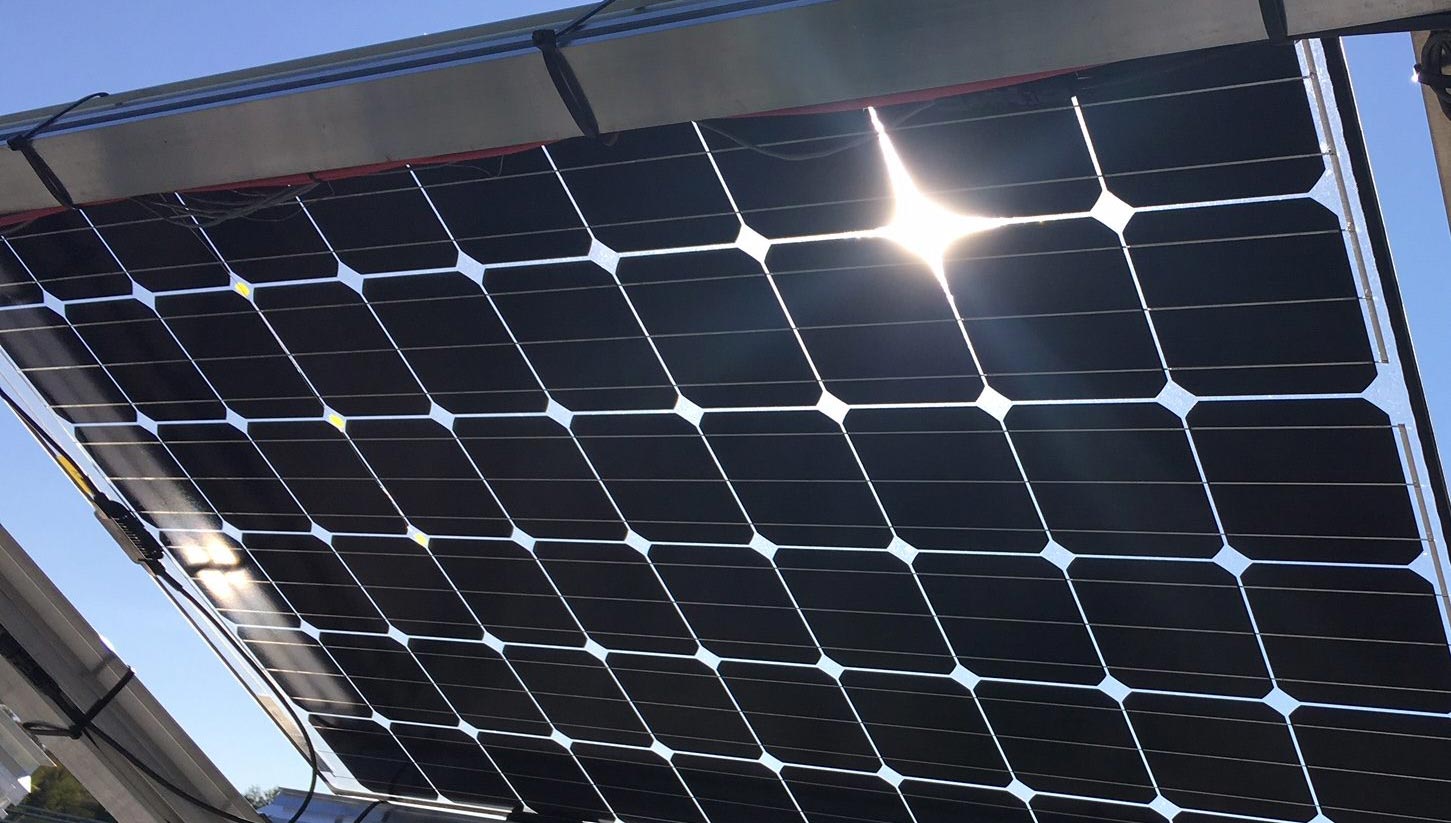
What does the performance analysis of the two types of panels show?
Comparison between single-sided and bifacial photovoltaic panels
The analysis clearly shows that bifacial solar panels outperform traditional single-sided panels, providing between 7% and 12% more energy production. This advantage is essential for farmers and business owners because it means more energy from the same installed area, lower electricity costs and a faster return on investment.
Influence of the reflective surface
The study highlighted that the choice of surface underneath the panels has a direct impact on their performance. The best results were reported with light and reflective materials:
- White geotextile → up to +12% more energy
- Shiny aluminum foil → about +10% more energy
- Patinated sheet metal → approximately +8.2% more energy
- Artificial grass → average +7.1% more energy
These results prove that through proper surface selection, farmers and businesses can increase the yield of their photovoltaic systems without additional investments in equipment. The research results have been published in a highly rated international scientific journal, which validates them.
Agrovoltaics or how do bifacial panels affect crops?
The use of solar panels over agricultural areas – allows for the simultaneous production of energy and agricultural crops. Under the panels, the temperature remains more balanced, which supports plant growth. In addition, water evaporation is reduced, which means less need for irrigation. Thus, yields remain stable, and in some cases even improve thanks to a more favorable microclimate.
Benefits of bifacial solar panels for farmers
Investing in bifacial solar panels doesn’t just bring more energy – it provides real economic and strategic advantages for farms. First and foremost, farmers benefit from:
- Lower costs and protection from energy market fluctuations – thanks to higher efficiency, bifacial panels generate more energy from the same area, leading to direct savings and cost stability.
- Енергийна независимост – собственото производство на ток осигурява надеждно захранване за ферми, оранжерии, системи за напояване и други ключови процеси, намалявайки зависимостта от външни доставчици.
- Sustainable development – the combined use of land for energy and agriculture increases the efficiency of farms and contributes to reducing the ecological footprint.
Conclusion from the research conducted
The analysis of the performance of both types of photovoltaic panels clearly proves that bifacial solar modules are the more efficient solution for the agricultural sector. They provide more energy, faster return on investment and better land use – factors that benefit both farmers and small and medium-sized businesses.
Browse our offers for bifacial solar panels in the Solar House online store and discover which solutions are most suitable for your farm.
* Productivity modeling and analysis of mono- and bifacial PV panels under different weather conditions and reflection surfaces for application in the agriculture sector. Stoyanov, L., Bachev, I., Milenov, V., Zarkov, Z., & Lazarov, V. (2025). AgriEngineering, 7.